Platform roles & architecture
Define which platform owns each capability, record and decision so the estate grows by design rather than duplication.
Clarify · align · simplifyPlatforms / Cross-Platform Ecosystems
Make every platform play the right role—connected through shared identity, trusted data, governed integration and end-to-end business workflows.
One ecosystem, many strengths
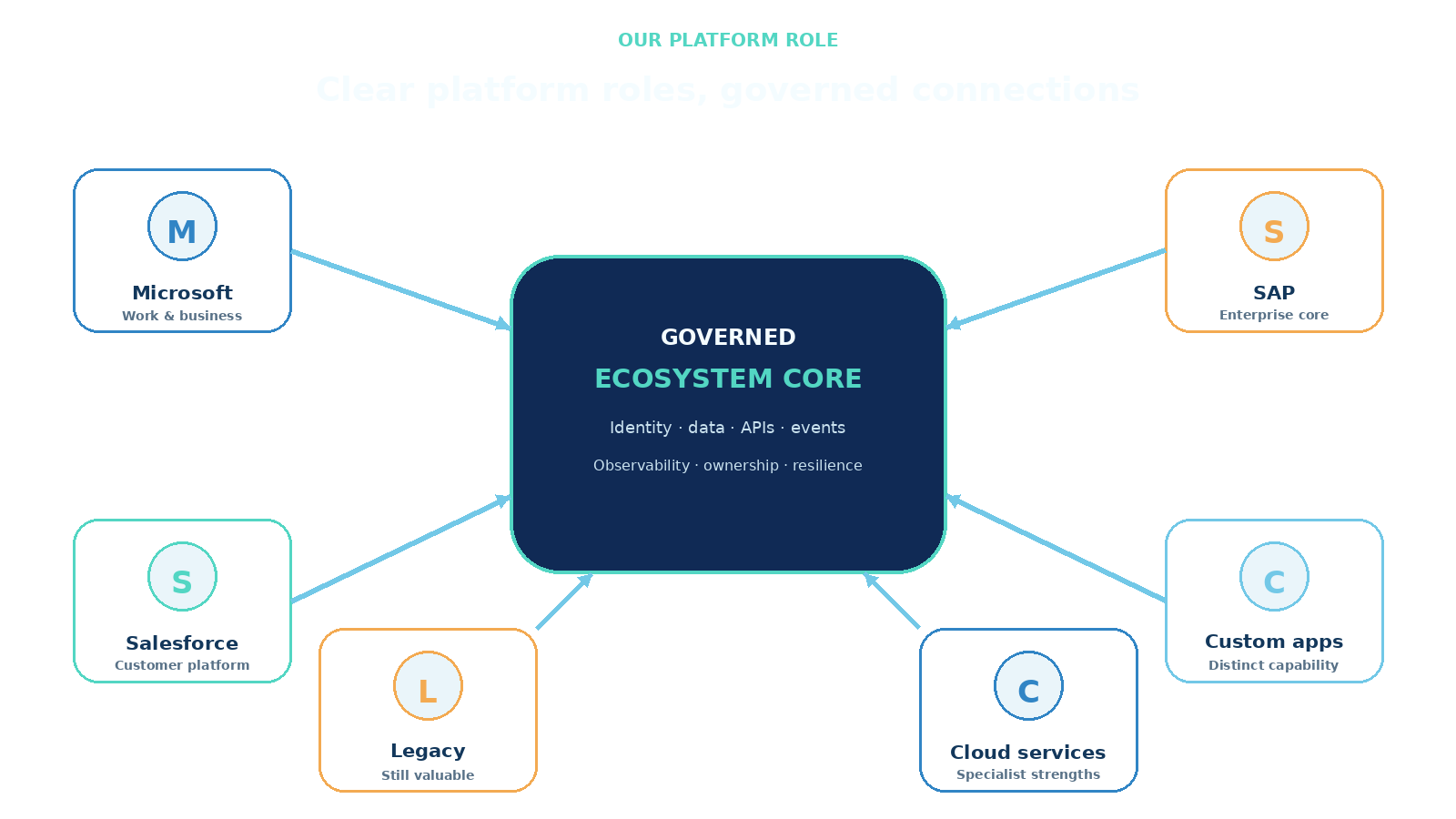
Modern organisations rarely operate on one platform. Value comes from giving each system a clear role and connecting the whole environment around the business.
ToqXcel helps organisations coordinate Microsoft platforms, Salesforce, SAP, specialist cloud services, custom applications and established legacy systems without creating another layer of uncontrolled complexity.
We shape the shared architecture, identity, data, integration and ownership model that lets information and work move reliably across platform boundaries.
Connected ecosystem disciplines
Six disciplines turn a mixed technology estate into one dependable business environment.
Define which platform owns each capability, record and decision so the estate grows by design rather than duplication.
Clarify · align · simplifyCreate consistent sign-in, role and access controls across platforms while respecting local security boundaries.
Identify · authorise · protectEstablish common definitions, ownership, quality and synchronisation so data remains dependable wherever it is used.
Define · exchange · trustUse reusable contracts and governed event flows to connect cloud, enterprise, custom and legacy capabilities.
Expose · connect · reuseCoordinate work across platform boundaries while keeping decisions, exceptions and ownership visible to people.
Trigger · coordinate · completeMonitor service health, data movement and dependencies while governing releases and platform change over time.
Observe · govern · evolveEcosystem design principles
A healthy ecosystem balances shared standards with platform autonomy, allowing teams to move without weakening security, trust or operational resilience.
Assign clear ownership for customers, finance, people, products, content and operational records.
Stable APIs, events and data products reduce point-to-point dependency and make future change safer.
Identity, authorisation, encryption and audit controls travel with information across the ecosystem.
Retries, queues, reconciliation and visible exceptions prevent one platform failure from stopping the business.
Versioning, testing, release coordination and ownership keep connected platforms dependable as they evolve.
Our platform operating model
ToqXcel defines the platform’s role, the boundaries around it and the evidence needed to evolve it with confidence.
Assign ownership for records and capability
Consistent access across local boundaries
Reusable APIs, messages and data products
Coordinate work, exceptions and evidence
Observe dependencies, reconcile and evolve safely
Ecosystem outcomes
Start with the priority
Begin with a focused conversation about the business requirement, current environment and outcome you need.